Government
St. Augustine’s Free STAR Circulator Route Expands onto Anastasia Island and the Beach
Parking downtown may soon become a much easier problem to solve: don’t park downtown at all. The City of St. Augustine is moving forward with a major expansion of its free St. Augustine Rider, or STAR
By St. Augustine Social
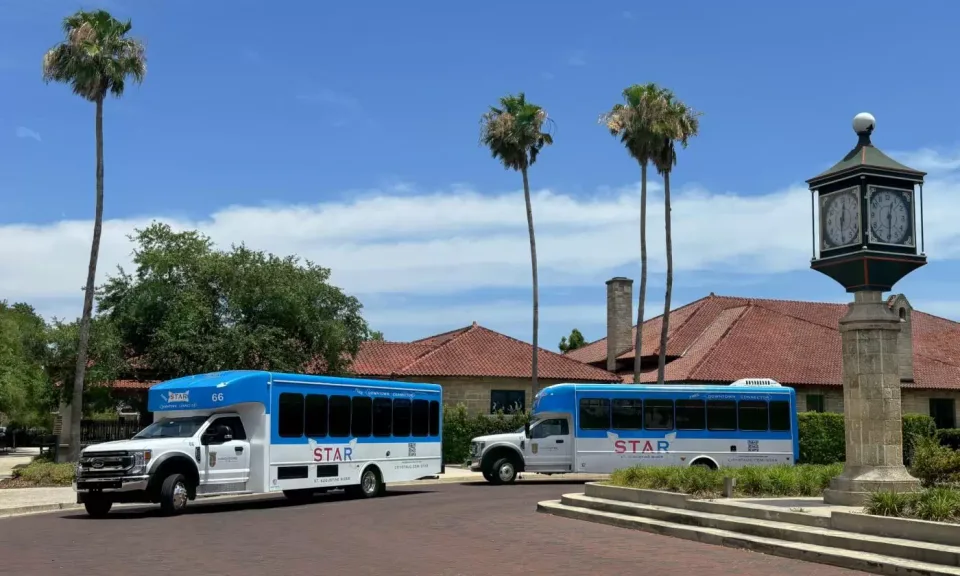
Parking downtown may soon become a much easier problem to solve: don’t park downtown at all. The City of St. Augustine is moving forward with a major expansion of its free St. Augustine Rider, or STAR, Circulator that would extend service beyond the historic district and across the Bridge of Lions to Anastasia Island and the beach.
City commissioners unanimously approved the expansion at their August 10 meeting following the success of an Island-side pilot during last year’s Nights of Lights. According to Community Services Director Jaime Perkins, the pilot drew enough riders to convince staff that a permanent expanded route could work.
Under the proposal, four circulators would operate seven days a week, with service generally running from 9 a.m. to 9 p.m. Sunday through Thursday and until 11 p.m. on Fridays and Saturdays. Buses would be spaced approximately 30 minutes apart along a loop expected to take about an hour and a half.
And the price to ride? Nothing. The $1.6 million program is also expected to be fully funded without fares. City staff said $1.5 million would come through the Florida Department of Transportation, with the remaining $100,000 invoiced through local tourist-development funding.
The route begins at the Visitor Information Center downtown and extends along the Anastasia Boulevard corridor, including stops intended to serve area hotels. That opens up an intriguing possibility for residents as well: parking east of the bridge and letting someone else handle the final stretch into downtown.
City leaders repeatedly pointed to the potential impact on traffic and parking. Every rider who chooses the circulator represents one less vehicle searching downtown streets for a space.
There is one notable exception. During Nights of Lights, the circulator would not attempt to travel back and forth across the Bridge of Lions because congestion would make reliable service difficult. Instead, Island-side circulation would continue, stopping near the east side of the bridge, similar to the previous pilot.
The city also plans to market the route through hotels, signage, maps and future bus-stop improvements.
St. Augustine Beach still has a say. City staff told commissioners the next step is to bring the proposal before the St. Augustine Beach Commission on September 8.
For residents who have long viewed downtown parking as a reason to stay home, the bigger story may be what happens next. St. Augustine is slowly building something cities much larger take for granted: a transportation network that makes getting somewhere different from finding somewhere to park.