Government
Meet the New Mayor of St. Augustine, Cynthia Garris
Cynthia Garris knows the inner workings of St. Augustine in a way few elected officials can. She has seen the city from a parking garage booth, from the halls of the Government House and police statio
By Heather Vreeland

Cynthia Garris knows the inner workings of St. Augustine in a way few elected officials can. She has seen the city from a parking garage booth, from the halls of the Government House and police station, and from behind the scenes as the person responsible for keeping public buildings operating. She has watched city employees navigate difficult days, listened to residents describe unsafe streets, and learned that an issue that looks simple from the outside often becomes more complicated once you are inside the system.
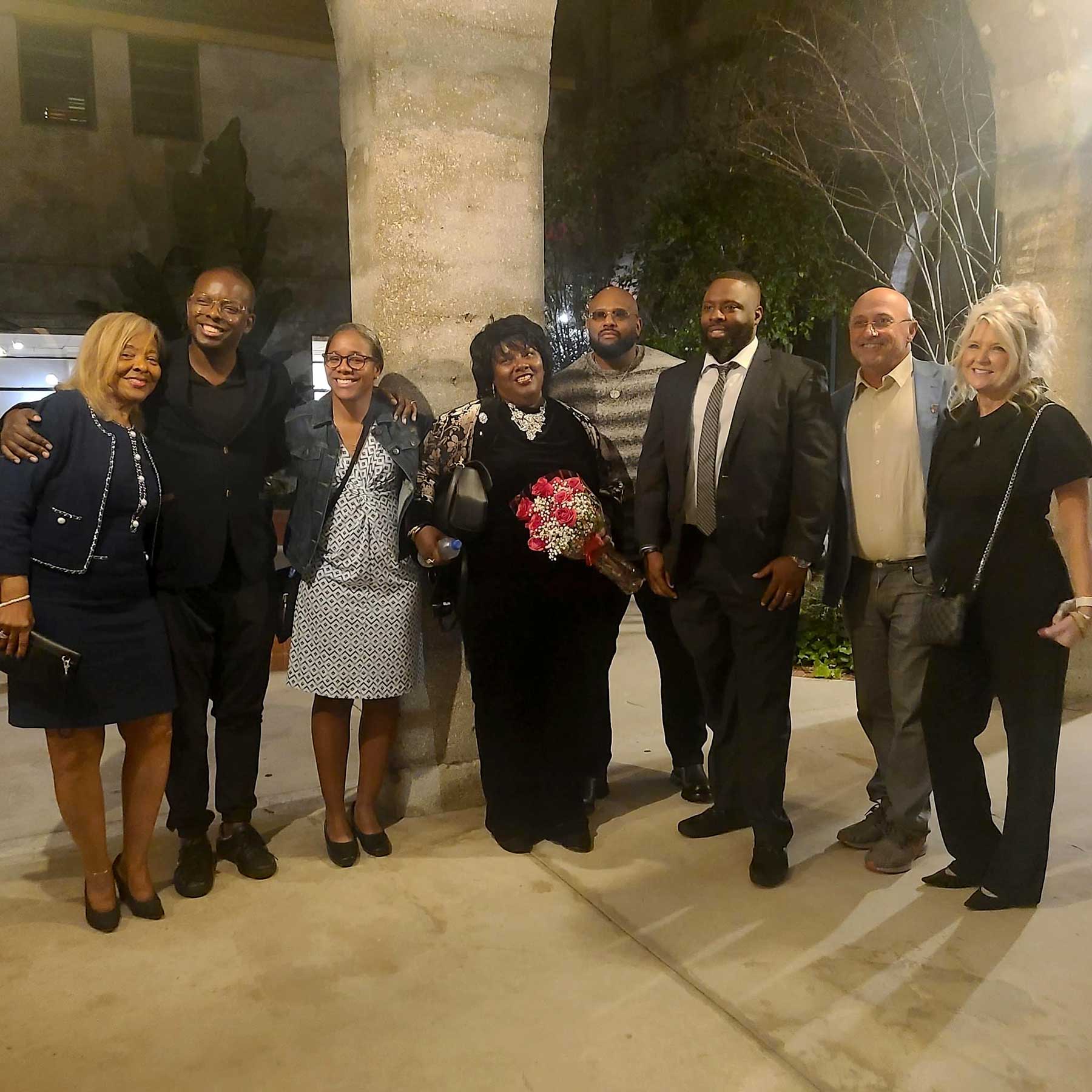
Now, after serving on the City Commission, Garris is preparing to become St. Augustine’s first Black mayor.
Her election came without opposition, but not without a long road behind it. Garris’ route to the mayor’s office included degrees, professional experience, setbacks, persistence and, at one point, a deliberate decision to take a custodial job with the city because it offered something she needed: a full-time position and a foothold.
“I’ve got to humble myself so I can rise again,” she said.
Garris was born in St. Augustine, as were her parents and grandparents. Her family’s local roots include her great-grandmother, Blanche Carn, who lived on Gulf Avenue. Though Garris spent part of her childhood in Rhode Island after her parents moved north, St. Augustine remained a defining part of her life. She returned during her high school years and came back for good in 1990.
Some of her earliest civic memories came from watching the civil rights movement on television as a child. She remembers asking her parents where she was seeing people being hosed and prevented from voting.
“They said, ‘That’s down south,’” she recalled. “From that, I realized that voting was important.”
When she turned 18, she registered to vote in Rhode Island. That early understanding of participation and representation would eventually shape her own path into public office.
Before joining the city, Garris worked a variety of jobs, including as a bank teller, at the St. Johns County courthouse and as a financial advisor for the University of Phoenix in Jacksonville. She had earned both bachelor’s and master’s degrees, but after returning to St. Augustine she was looking for stability, benefits and health insurance of her own.
In 2008, she began working part-time in the city parking garage. She did not treat the position as a temporary stop. Instead, she learned it thoroughly, even paying attention to the technical work required when the garage’s computers went down.
“I wanted to know why we had to wait this long,” she said of the outside technician who was called in for repairs. After watching and asking questions, Garris learned enough to get the systems running again herself.
She applied for several full-time city jobs, but continued to encounter obstacles. When she learned of an opening for a custodial position that paid just over $25,000, she saw an opportunity. She left her degrees off the application, drawing instead on previous housekeeping management experience. She was hired in the interview.
For a time, she cared for the Government House and police station. Garris understood that some people might question why someone with her education would take the work, but she viewed it as a practical choice rather than a step backward.
“I need to get full time,” she remembered thinking. “I need to get paid for holidays. I need those things.”
Her children supported the decision. Education had long been central in the Garris household; she encouraged her children to pursue it as a means of opening doors and claiming opportunities. Her daughter, Hazel, served in the Army and is now an endurance runner. Her son George attended Morehouse College and later Stanford, building a career in finance. Her oldest son works in fitness.
That family confidence also helped reinforce Garris’ willingness to keep moving forward when circumstances required it.
Within about a year of taking the custodial role, Garris was selected from a pool of 32 applicants for a facilities coordinator position. The job put her in charge of overseeing city properties and dispatching maintenance teams when problems arose. She spent more than a decade in the role, eventually totaling 13 years with the city.
The experience gave her a close view of municipal government beyond the public meetings residents see on television. She learned the budget, the buildings, the departments and the people responsible for daily operations. She also saw employees who felt unheard or unsupported.
“I saw a lot of stuff going wrong,” she said. “I am not in a situation to do anything about it, but if I am a commissioner, I can make noise about it.”
When she retired from city employment, she told a colleague she would be back. “It’s going to be like the Fourth of July when I come back,” she said. He guessed correctly: she planned to return as a commissioner.
On the commission, Garris has focused on issues that begin with residents’ everyday experience of the city. She points to road conditions, pedestrian safety and the need for better communication between government and neighborhoods. Her advocacy for sidewalks along Old Dixie Highway grew from conversations with people who said they were afraid to walk or bike on narrow roads alongside fast-moving traffic.
She also pushed for safety improvements near Shiloh/Renement Outreach, where pedestrians crossed a busy street to reach the church and nearby businesses. The effort required coordination across city and county lines, but it resulted in a crosswalk with flashing signals, with further traffic improvements anticipated.
As mayor, Garris hopes to encourage what she calls a “City Connect” approach. In her view, residents should feel they have a role in caring for their neighborhoods—reporting potholes, unsafe conditions and concerns that city staff may not encounter on their own routes.
“We can ride around all day, but we might not ride down your street,” she said. “If you see that there’s a problem, you’re supposed to call in.”
She would also like to see residents more fully acknowledged at commission meetings, even when elected officials cannot immediately resolve every concern. A brief response, she believes, can make a meaningful difference to someone who has taken time off work, paid to park and waited to speak.
“Joe Smith goes home like, ‘Yes, they heard me. I am seen,’” she said.
For Garris, public service is tied closely to faith, kindness and a personal rule she tries to carry into every setting: leave people better than she found them. She speaks easily about praying with strangers, checking on colleagues and making room for people who need to be heard.
Her story may be historic, but it is also distinctly local. It belongs to a woman who was born here, worked here, raised a family here, learned the city from its ground level and kept believing she could help shape it.
As St. Augustine welcomes its new mayor, Garris is not arriving as an outsider with a prepared script. She is arriving with the accumulated knowledge of someone who has spent years listening closely—and who intends to keep doing so.